


In Case Of Emergency 9-1-1

Non-Emergency Call 281-458-1431

Protecting The Community, Through Fire Prevention

Loading...
Home2024-06-16T20:53:50-05:00
Loading...

Fire Chief Welcome

Welcome to the Sheldon Community Fire & Rescue website. We hope to reach out to the community and provide safety tips, fire prevention techniques, and useful resources.

The department has been in service since 1955, and began with the merger of 2 departments.

The men and women that make up the department are your neighbors, friends, and relatives, and are actively involved in the community. We are striving to make this a better place to work, live and raise your family.

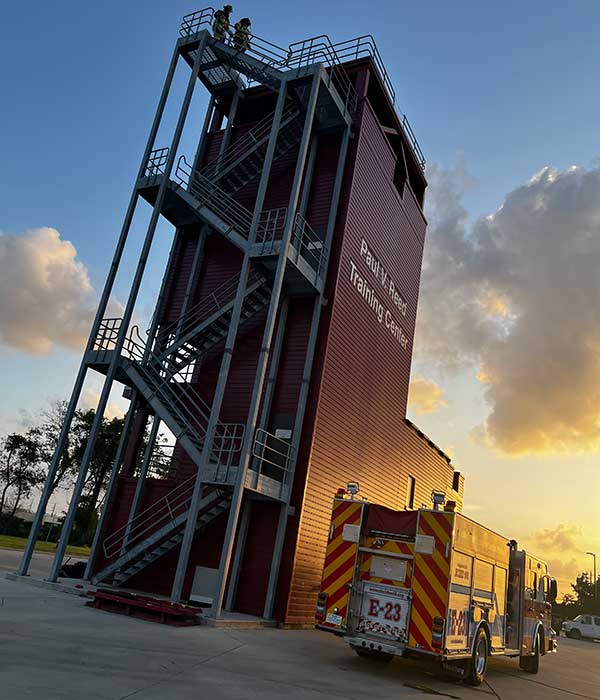
Facilities

Sheldon Community Fire and Rescue has a long-standing commitment and history of providing a rapid response time from one of our 4 stations.

Personnel

We are staffed by personnel that consider the community and residents their home and family.

Latest News

We strive to keep the public up-to-date on what’s going on in our community. See below for the latest news from Sheldon Community Fire & Rescue.

The Atlantic and central Pacific hurricane season (includes Hawaii) officially runs June 1 through November 30. That’s about 26 days from today.

The best time to prepare is well before the official start of the season. Avoid having to rush through potentially life-saving preparations by waiting until it’s too late. Get your disaster supplies while the shelves are still stocked, and get that insurance checkup early, as flood insurance requires a 30-day waiting period.

Develop an evacuation plan
If you are at risk from hurricane impacts, you need an evacuation plan. Now is the time to begin planning where you would go and how you would get there. You do not need to travel hundreds of miles. Your destination could be a friend or relative who lives in a well built home outside flood prone areas. Plan several routes. Be sure to account for your pets.

If you don’t have a vehicle, check with local officials to see what transportation options they may have available.

Assemble disaster supplies
Whether you’re evacuating or sheltering-in-place, you’re going to need supplies not just to get through the storm but for the potentially lengthy and unpleasant aftermath. Have enough non-perishable food, water and medicine to last each person in your family a minimum of 3 days (store a longer than 3-day supply of water, if possible). Electricity and water could be out for weeks. You’ll need extra cash, a battery-powered radio and flashlights. You may need a portable crank or solar-powered USB charger for your cell phones. And lastly, don’t forget your pets.

Get an insurance check-up to make sure you have enough insurance to repair or even replace your home and/or belongings. Remember, home and renters insurance doesn’t cover flooding, so you’ll need a separate policy for it. Flood insurance is available through your company, agent, or the National Flood Insurance Program at floodsmart.gov. Act now, as flood insurance requires a 30-day waiting period.

Take the time before hurricane season begins to document your possessions: photos, serial numbers, or anything else that you may need to provide your insurance company when filing a claim.

Create a communication plan
Take the time now to write down your hurricane plan, and share it with your family. Determine family meeting places, and make sure to include an out-of-town location in case of evacuation. Write down on paper a list of emergency contacts, and make sure to include utilities and other critical services — remember, the internet may not be accessible during or after a storm.

Strengthen your home
Now is the time to improve your home’s ability to withstand hurricane impacts. Trim trees. Install storm shutters, accordion shutters, and/or impact glass. Seal outside wall openings. Remember, the garage door is the most vulnerable part of the home, so it must be able to withstand hurricane-force winds. Many retrofits are not as costly or time consuming as you may think. If you’re a renter, work with your landlord now to prepare for a storm.

Now is the time to purchase the proper plywood, steel or aluminum panels to have on hand if you need to board up the windows and doors ahead of an approaching storm.
... See MoreSee Less

The Atlantic and central Pacific hurricane season (includes Hawaii) officially runs June 1 through November 30.  That’s about 26 days from today. 

The best time to prepare is well before the official start of the season. Avoid having to rush through potentially life-saving preparations by waiting until it’s too late. Get your disaster supplies while the shelves are still stocked, and get that insurance checkup early, as flood insurance requires a 30-day waiting period.

Develop an evacuation plan
If you are at risk from hurricane impacts, you need an evacuation plan. Now is the time to begin planning where you would go and how you would get there. You do not need to travel hundreds of miles. Your destination could be a friend or relative who lives in a well built home outside flood prone areas. Plan several routes. Be sure to account for your pets.

If you don’t have a vehicle, check with local officials to see what transportation options they may have available.

Assemble disaster supplies
Whether you’re evacuating or sheltering-in-place, you’re going to need supplies not just to get through the storm but for the potentially lengthy and unpleasant aftermath. Have enough non-perishable food, water and medicine to last each person in your family a minimum of 3 days (store a longer than 3-day supply of water, if possible). Electricity and water could be out for weeks. You’ll need extra cash, a battery-powered radio and flashlights. You may need a portable crank or solar-powered USB charger for your cell phones. And lastly, don’t forget your pets. 

Get an insurance check-up to make sure you have enough insurance to repair or even replace your home and/or belongings. Remember, home and renters insurance doesn’t cover flooding, so you’ll need a separate policy for it. Flood insurance is available through your company, agent, or the National Flood Insurance Program at floodsmart.gov. Act now, as flood insurance requires a 30-day waiting period.

Take the time before hurricane season begins to document your possessions: photos, serial numbers, or anything else that you may need to provide your insurance company when filing a claim.

Create a communication plan
Take the time now to write down your hurricane plan, and share it with your family. Determine family meeting places, and make sure to include an out-of-town location in case of evacuation. Write down on paper a list of emergency contacts, and make sure to include utilities and other critical services — remember, the internet may not be accessible during or after a storm.

Strengthen your home
Now is the time to improve your home’s ability to withstand hurricane impacts. Trim trees. Install storm shutters, accordion shutters, and/or impact glass. Seal outside wall openings. Remember, the garage door is the most vulnerable part of the home, so it must be able to withstand hurricane-force winds. Many retrofits are not as costly or time consuming as you may think. If you’re a renter, work with your landlord now to prepare for a storm.

Now is the time to purchase the proper plywood, steel or aluminum panels to have on hand if you need to board up the windows and doors ahead of an approaching storm.

National Hurricane Preparedness Week is May 3-9, 2026.

Be ready for hurricane season. Take action TODAY to be better prepared for when the worst happens. Understand your risk from hurricanes, and begin pre-season preparations now. Make sure you have multiple ways of receiving forecasts and alerts, and know what to do before, during, and after a storm.
For more info see noaa.gov
... See MoreSee Less

National Hurricane Preparedness Week is May 3-9, 2026.

Be ready for hurricane season. Take action TODAY to be better prepared for when the worst happens. Understand your risk from hurricanes, and begin pre-season preparations now. Make sure you have multiple ways of receiving forecasts and alerts, and know what to do before, during, and after a storm.
For more info see noaa.gov

MVA: Two-vehicle incident, 11000 block C.E. King Parkway north of Garrett Rd. ... See MoreSee Less

MVA: Two-vehicle incident, 11000 block C.E. King Parkway north of Garrett Rd., our Station No. 3 responded, all occupants out being evaluated by South Lake Houston EMS, one vehicle reported exiting church parking lot, struck by other northbound reported at high rate of speed. HCSO is on location. ... See MoreSee Less

MVA: Two-vehicle incident, 11000 block C.E. King Parkway north of Garrett Rd., our Station No. 3 responded, all occupants out being evaluated by South Lake Houston EMS, one vehicle reported exiting church parking lot, struck by other northbound reported at high rate of speed. HCSO is on location.Image attachment

FLOOD WATCH REMAINS IN EFFECT THROUGH LATE TONIGHT
Instruction: You should monitor later forecasts and be alert for possible Flood Warnings. Those living in areas prone to flooding should be prepared to take action should flooding develop.
Description: Widespread 1 to 3 inches of rainfall has already fallen in the last 12 hours. A swath of 3 to 5 inches has been observed from Colorado County to NW Harris County. Waves of showers and storms will continue to produce rain rates of 1 to 2+ inches per hour through the evening hours. Training of cells and short duration intense rainfall may cause localized flooding. The Flood Watch is in effect until 3AM Saturday morning.
* WHAT...Flooding caused by excessive rainfall continues to be possible.
* WHERE...A portion of southeast Texas, including the following areas, Austin, Brazos, Burleson, Coastal Harris, Colorado, Fort Bend, Grimes, Inland Harris, Madison, Montgomery, Northern Liberty, Polk, San Jacinto, Southern Liberty, Trinity, Walker, Waller, Washington and Wharton.
* WHEN...Through late tonight.
* IMPACTS...Excessive runoff may result in flooding of rivers, creeks, streams, and other low-lying and flood-prone locations.
* ADDITIONAL DETAILS... - Waves of showers and storms continue to produce localized high rain rates and the potential for several inches of rain in a short time. - www.weather.gov/safety/flood
... See MoreSee Less

FLOOD WATCH REMAINS IN EFFECT THROUGH LATE TONIGHT
Instruction: You should monitor later forecasts and be alert for possible Flood Warnings. Those living in areas prone to flooding should be prepared to take action should flooding develop.
Description: Widespread 1 to 3 inches of rainfall has already fallen in the last 12 hours. A swath of 3 to 5 inches has been observed from Colorado County to NW Harris County. Waves of showers and storms will continue to produce rain rates of 1 to 2+ inches per hour through the evening hours. Training of cells and short duration intense rainfall may cause localized flooding. The Flood Watch is in effect until 3AM Saturday morning. 
* WHAT...Flooding caused by excessive rainfall continues to be possible. 
* WHERE...A portion of southeast Texas, including the following areas, Austin, Brazos, Burleson, Coastal Harris, Colorado, Fort Bend, Grimes, Inland Harris, Madison, Montgomery, Northern Liberty, Polk, San Jacinto, Southern Liberty, Trinity, Walker, Waller, Washington and Wharton. 
* WHEN...Through late tonight. 
* IMPACTS...Excessive runoff may result in flooding of rivers, creeks, streams, and other low-lying and flood-prone locations. 
* ADDITIONAL DETAILS... - Waves of showers and storms continue to produce localized high rain rates and the potential for several inches of rain in a short time. - http://www.weather.gov/safety/flood
Go to Top